Photographic Profile
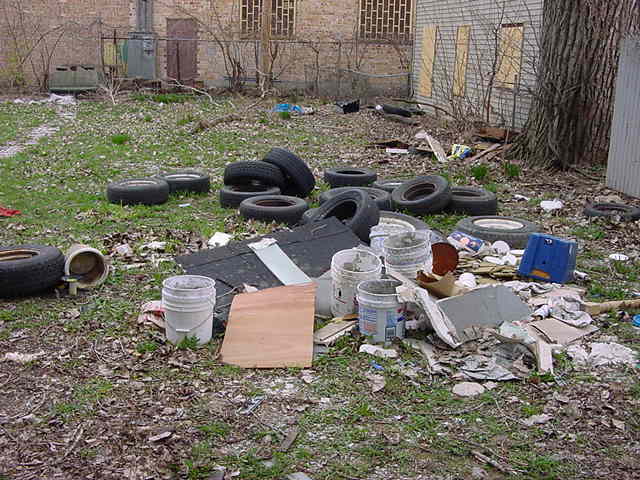
Tires, buckets, and other artificial containers will hold water for a long time after a rain, creating a breeding ground for types of mosquitoes that are invasive, aggressive, and carry viruses from West Nile Virus to Yellow Fever (even in the Chicago area). There are many spots within our District like this that need to be visited regularly and maintained to prevent mosquito breeding. Please contact us to report things like this!
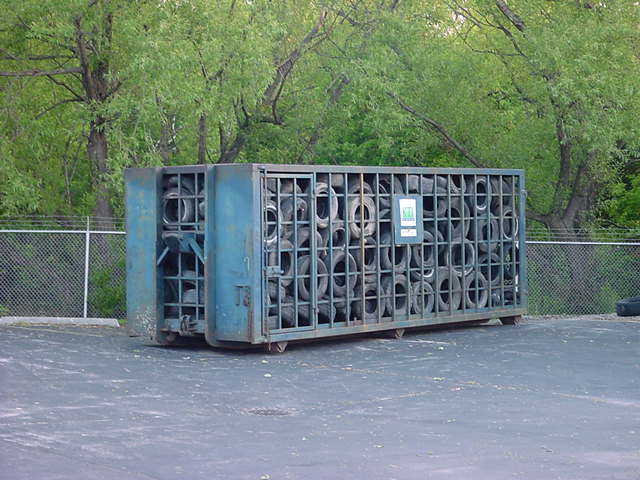
The District collects hundreds of tires each year in the field and brought in by residents for proper disposal. Tires are a highly desirable habitat for the most dangerous and aggressive types of mosquitoes.
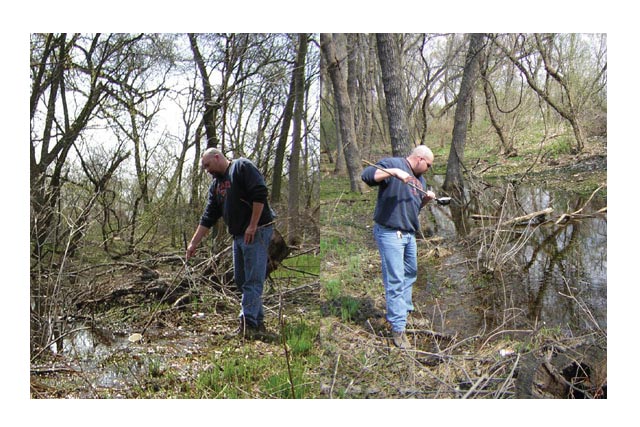
The District regularly visits and checks all documented areas that will hold water, and if heavy mosquito breeding is found with no other predators to keep numbers down, treatment will be conducted.
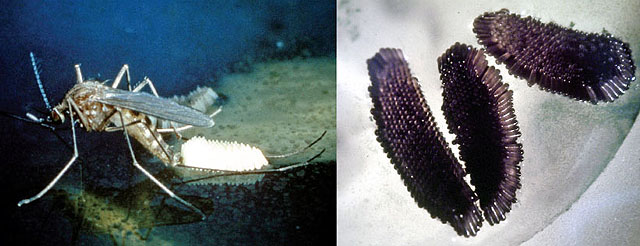
On the left is a Culex spp. mosquito laying an egg raft on stagnant, standing water. On the right is an image showing a close up of three of these egg rafts. Hundreds of individual eggs can be seen in each raft which will each hatch into a mosquito. Depending on how large the body of water is and how dirty it is, many of these eggs will create a blood seeking mosquito.
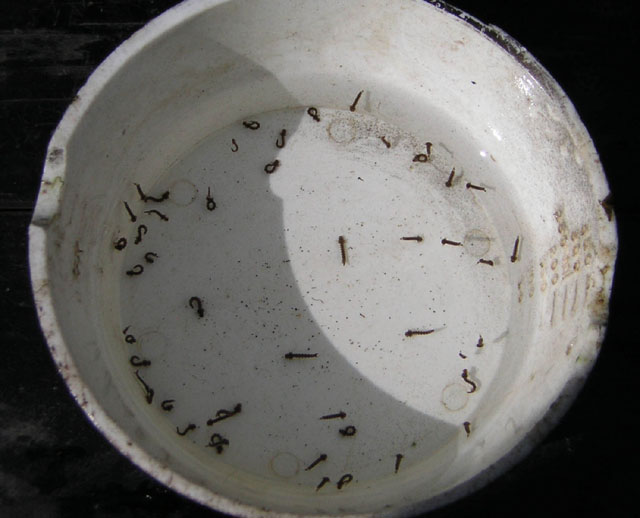
This image shows a random scoop of water from a mosquito source with highly developed mosquitoes.
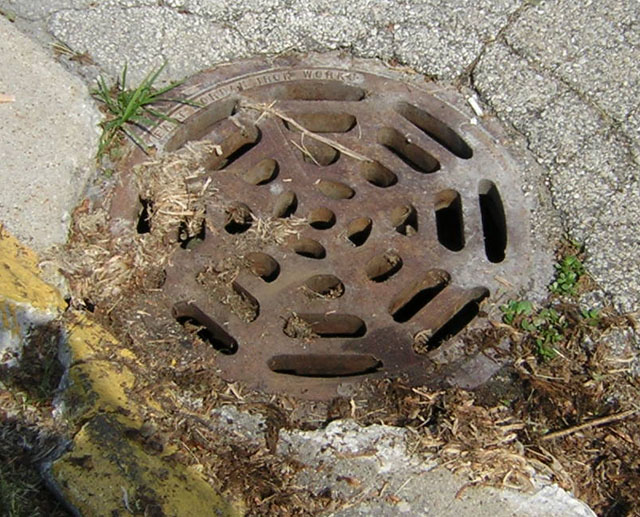
There are tens of thousands of these roadside catch basins throughout the district. These collect water so that roads do not flood, and the water will stay in the basins, becoming stagnant. These are our most significant source of West Nile Virus carrying mosquitoes. Very little else lives in this water and constant treatment of them is a necessity.
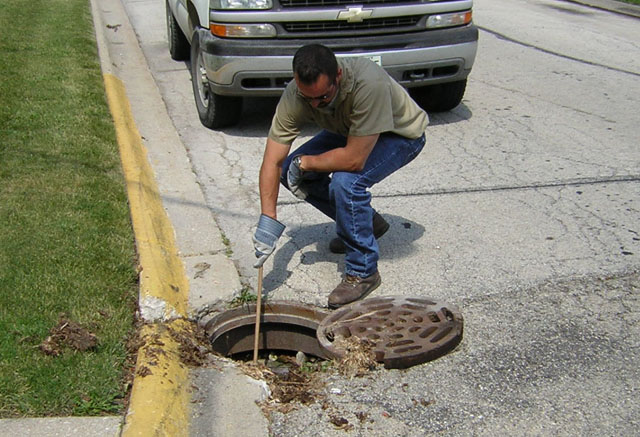
Our lab and field crews check roadside catch basins for mosquitoes to test the efficacy of the pesticides used and/or to see if retreatment is necessary following heavy rains.
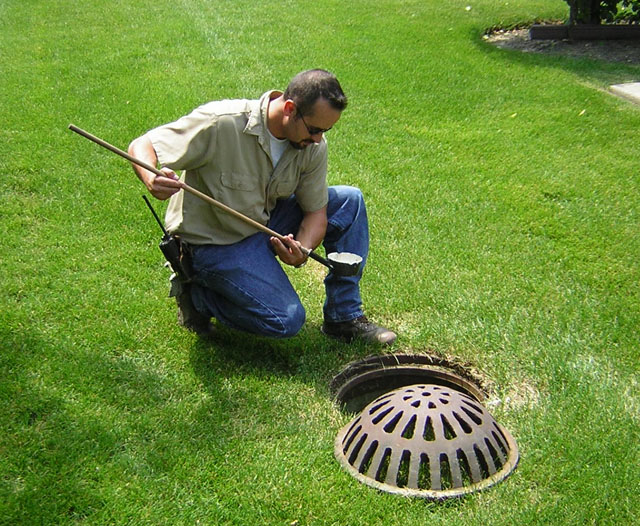
There are also a large number of difficult to treat catch basins that are not along roads and may be on private properties or in other inconspicuous places. Many are likely still unreported and untreated, so please report any to us so that we may check our records and add them to our treatment routes if necessary.
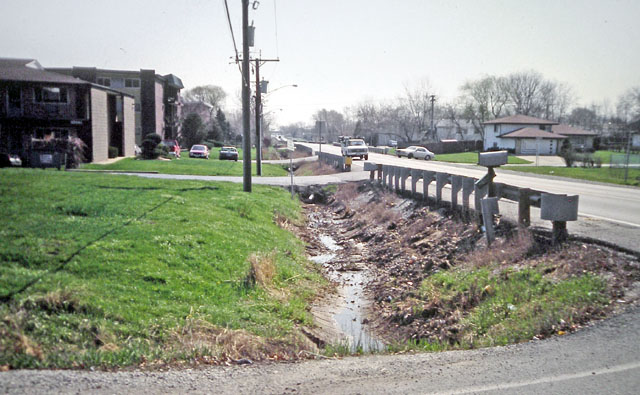
The District has many miles with stretches of roadside ditches that hold water for long periods of time after a rain and create many mosquitoes. Luckily these are easy for us to monitor and treat.
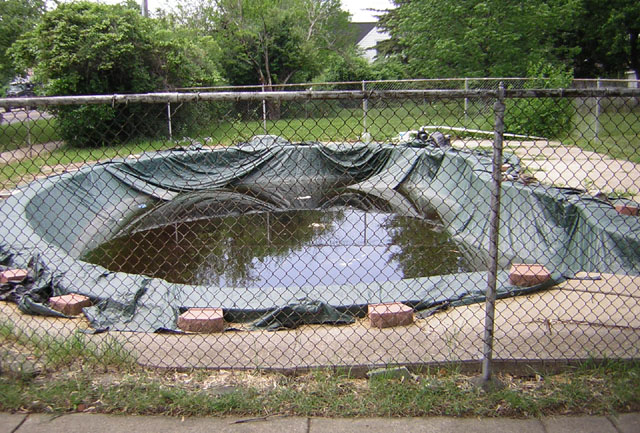
Improperly maintained swimming pools are a massive source of mosquitoes in residential areas. Swimming pools are a tremendous amount of work and very costly to maintain, so each year more are added to our treatment list. Please report any in your yards or neighborhood to us so that we may treat them. Many homeowners don't know of the ability for these to produce thousands of mosquitoes weekly.
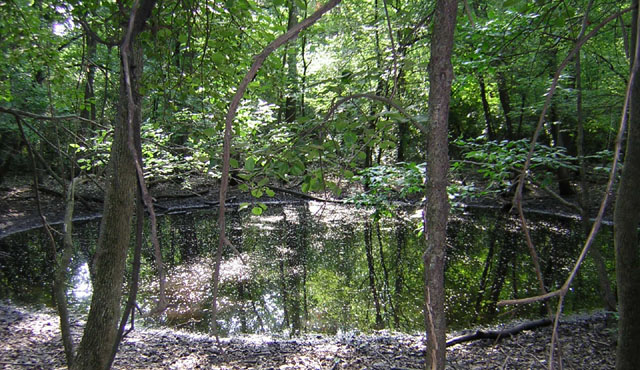
There are hundreds of low spots throughtout the District that will temporarily hold water. The eggs of certain mosquitoes are laid on the dirt and will hatch all at once the water pools, then fly off the water in huge swarms about a week later. Since they hatch and develop before anything else can move in or the water dries out, treatment of the water is necessary to keep the Chicago area habitable for people.
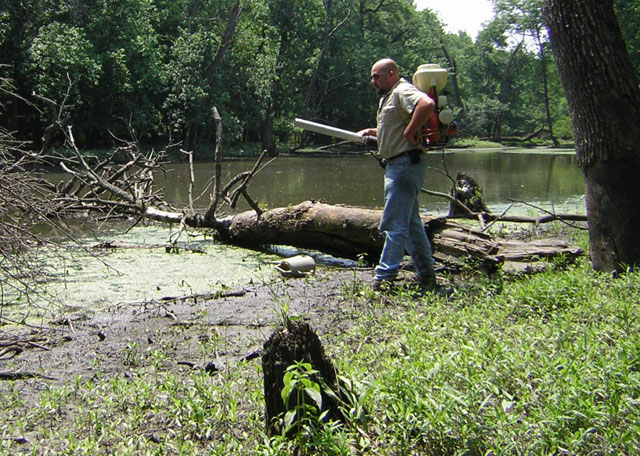
Shown is one of our technicians using a backpack to spread a granulated biological larvicide known as BTI that is specific to mosquitoes. As our name implies, the District lies within a low area along the Desplaines River, which was previously a forested swampy area before settlers moved in. Huge bodies of water like this can form near the river following rain and produce huge swarms of mosquitoes, making it impossible for outdoor activities without treatment.
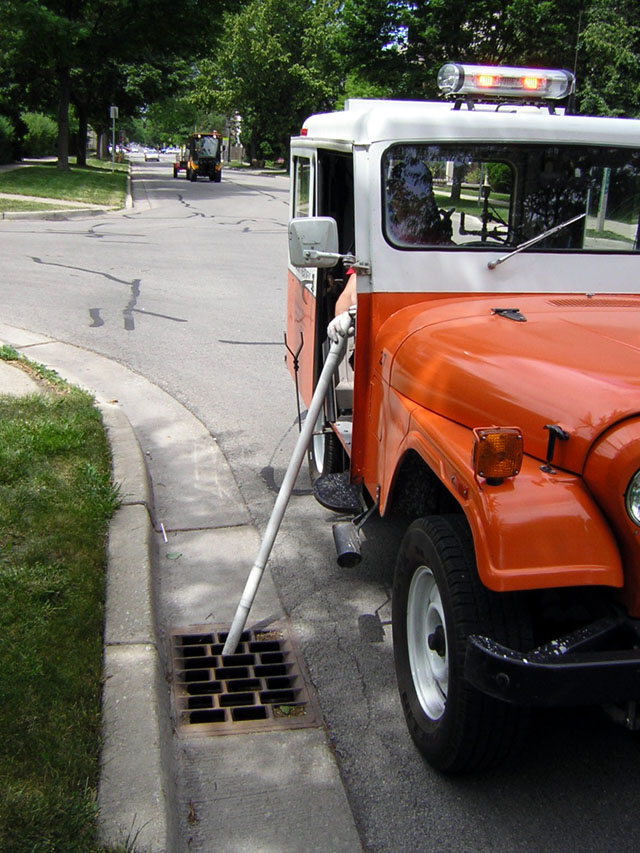
Our fleet of Jeeps drives down each road to drop a slow release briquet of mosquito larvicide to keep them from producing mosquitoes throughout the summer months.
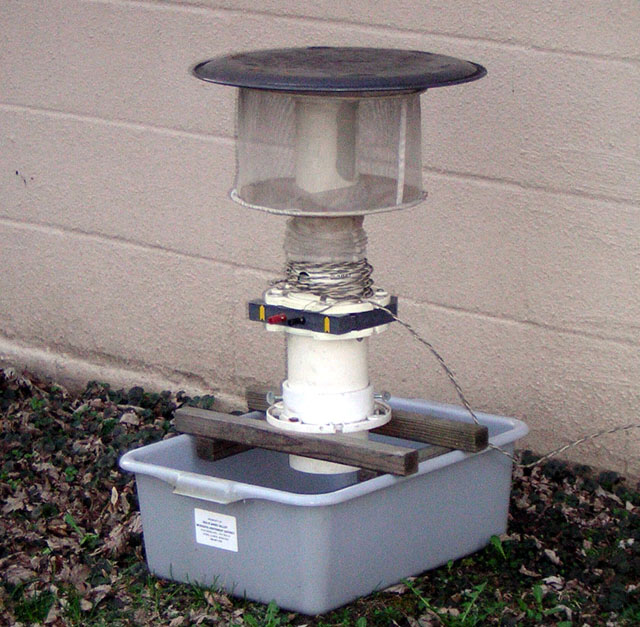
The District's lab has many mosquito traps in our District, which in many cases can collect hundreds of mosquitoes in a night. The picture trap is known as a gravid trap. It is a pan of water with a fan unit leading to a net that traps mosquitoes attracted to standing water.
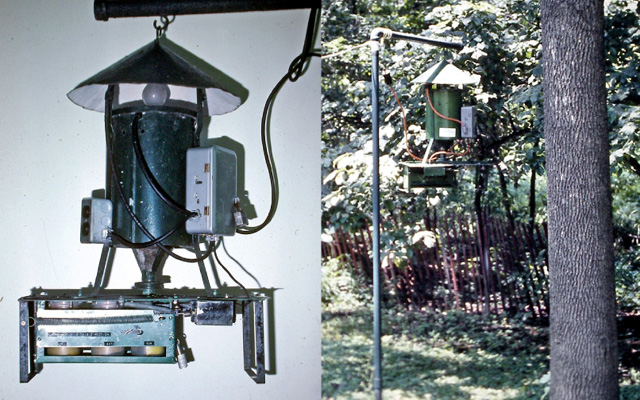
We also run New Jersey light traps, which is a hanging unit that attracts mosquitoes simply using a light bulb and a fan.
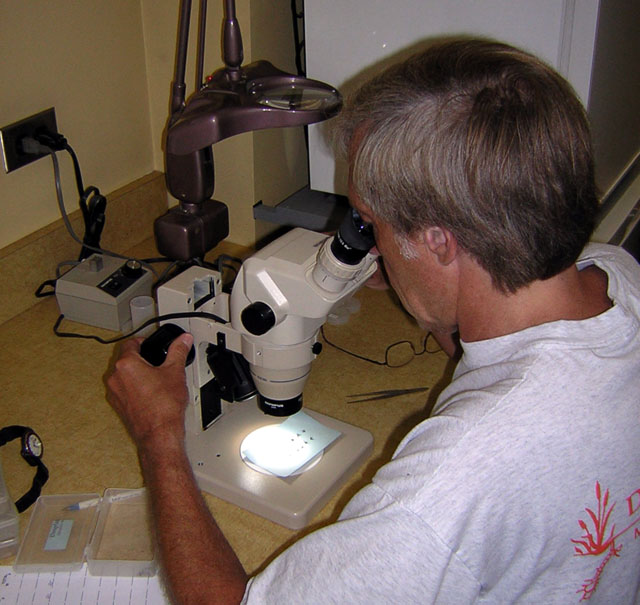
Mosquitoes collected by our traps are returned to our lab and promptly counted and identified to sex and species to monitor and keep record of the local mosquito population.
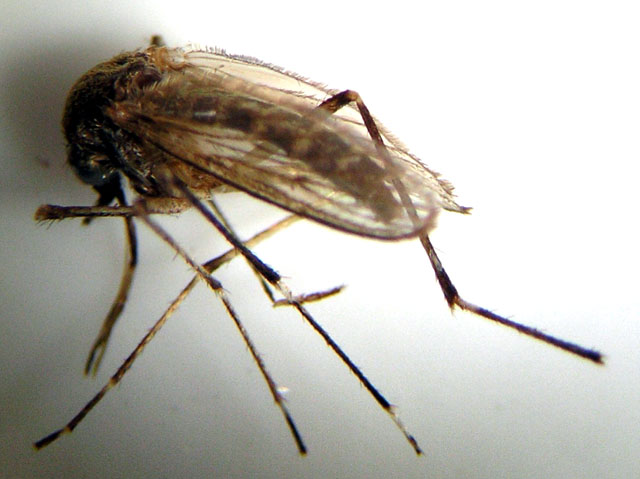
Although you may not be able to tell when they are flying around you, mosquitoes have distinct features that are obvious under a microscope, such as patches of white scales near the leg joints.
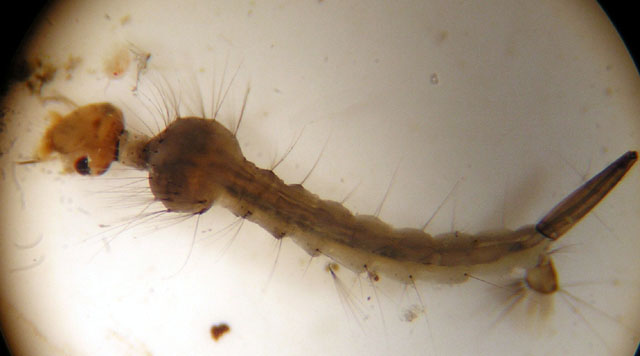
Samples of mosquito larvae are brought in from source water to be identified. Different types of mosquitoes can come out at different times, and keeping an eye on the larvae helps us get an idea of what types of mosquitoes to expect in the following weeks so that our different treatment plans can be conducted with data to back it up.
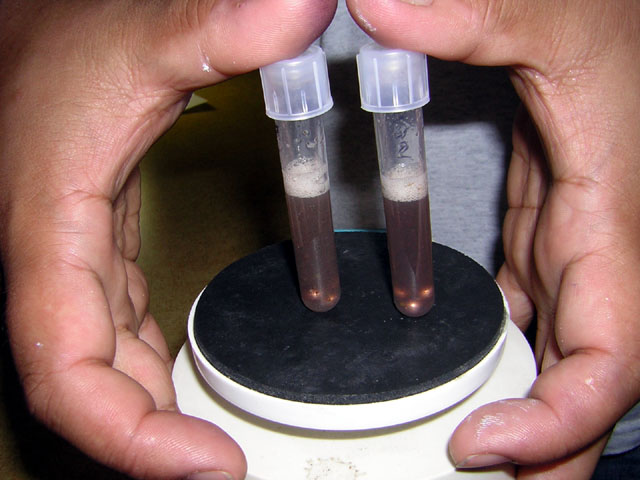
Many of our mosquitoes collected are subsequently pooled together and ground up to check for the presence of things such as West Nile Virus and Saint Louis Encephalitis Virus, which are present each year in the area.
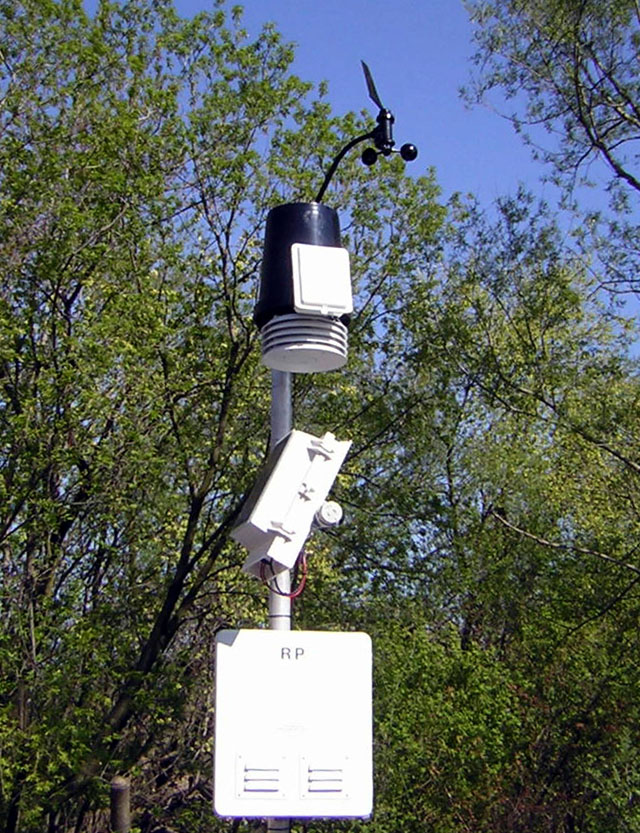
Monitoring weather helps us predict mosquito activity. A network of weather stations are placed throughout our District to monitor wind and rainfall, so that treatment and retreatment can be planned accordingly.
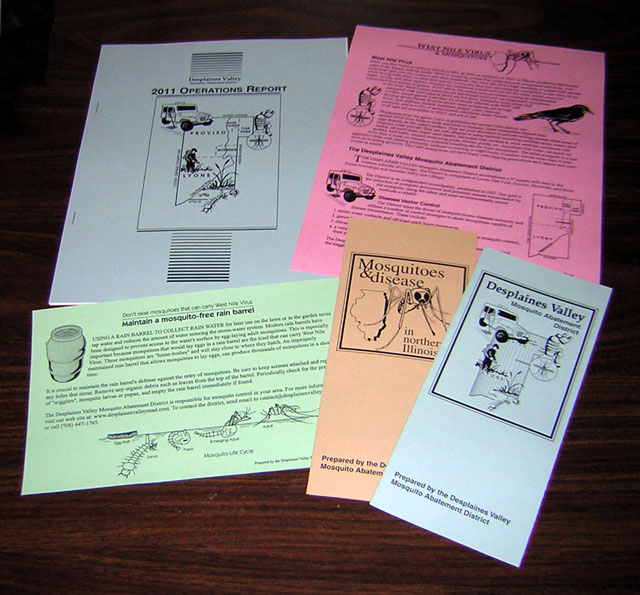
The District produces and distributes pamphlets and posters to local villages and community centers. If you would like us to provide some, feel free to contact us! Our reports of operations are publicly available on our district documents page.
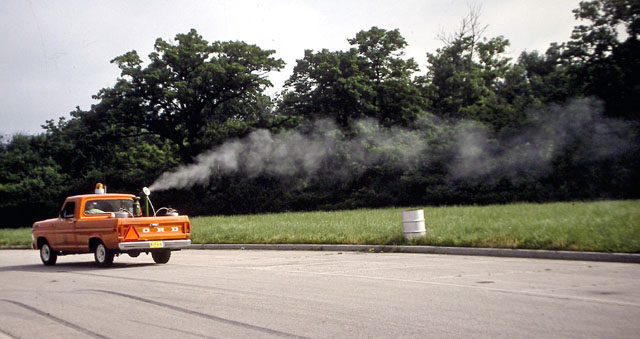
Although minimally conducted, truck mounted sprayers using an ultra low volume pesticide are used to target virus carrying mosquitoes at and after dusk to minimize the spread of disease.
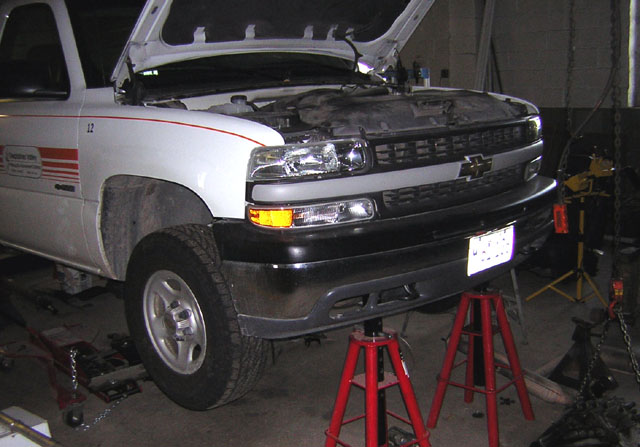
The District has a fleet of vehicles that are maintained in house, on site.